‘R’ is for …

This is from Cornflower’s blog: you ask in the comments for a letter and and one is sent to you at random. Then you list ten things you like/love beginning with the one you are allocated. Cornflower sent me ‘R’.

I’ve really enjoyed compiling this post and there are many other things beginning with ‘R’ that I could have added.

If any one else would like a go just ask for a letter in the comments and I’ll send one. Leave your email address (it’s hidden) so I can do it without everyone knowing what it will be.

R‘  is for …

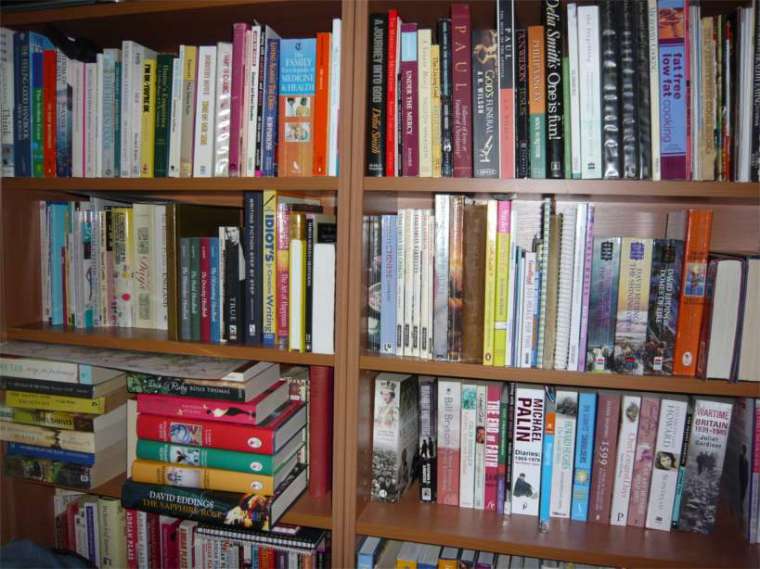
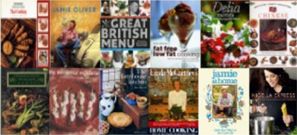
bookshelves
Reading
reading
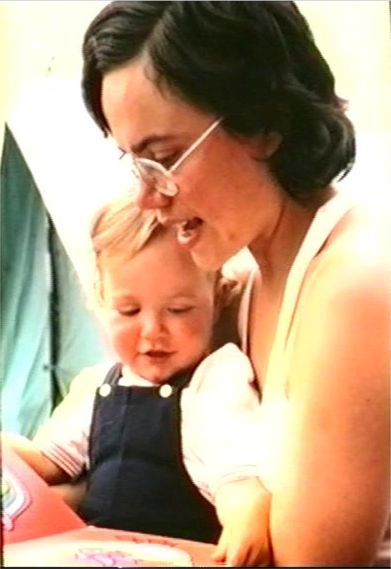
Me reading to Paul (old photo!)
red-wine
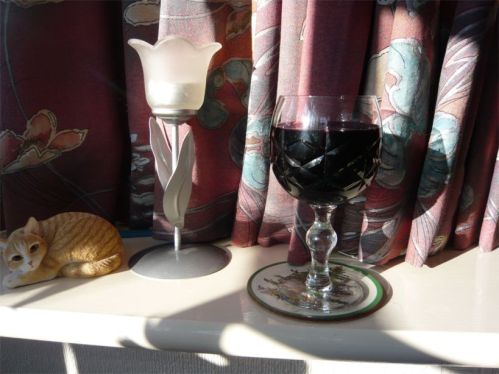
Red Wine

rye

recipes1
Recipes

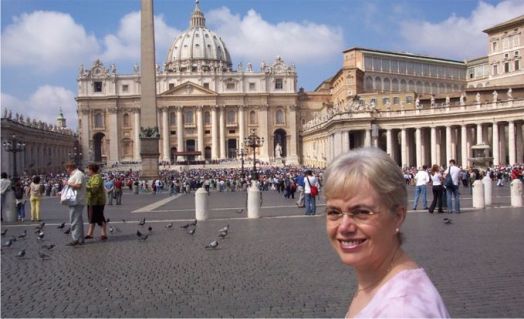
rome

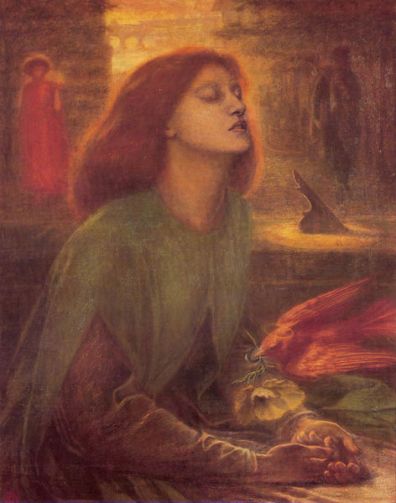
rossetti_beata-beatrix
Rossetti’s Beata Beatrix
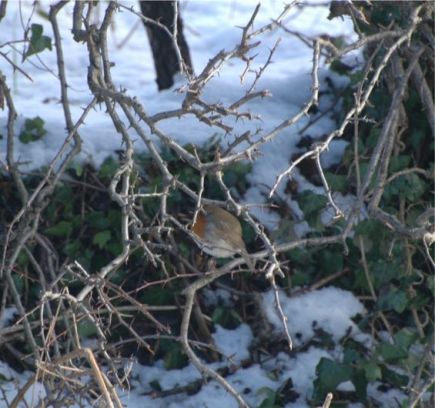
robin1
Robin hiding in the hedge

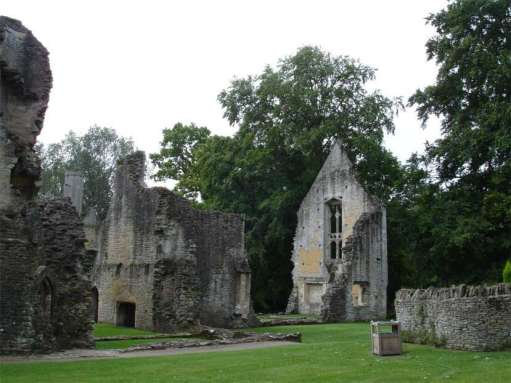
ruins-minster-lovell

rosemary
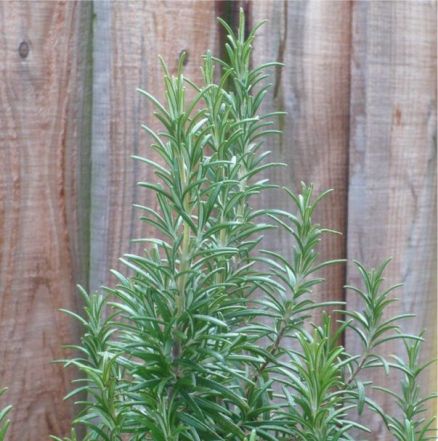
Rosemary
aah-white-rabbitm
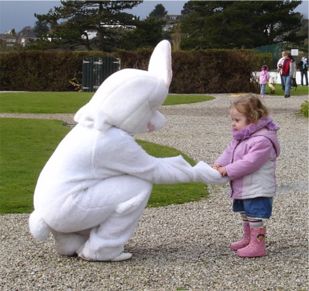
Aah! Easter Bunny & Granddaughter

Library Loot

Library Loot is a weekly event co-hosted by Eva and Alessandra  that encourages bloggers to share the books they’ve checked out from the library.

I must confess that I always have far more books out from the library than I could ever read in the loan period and I take back a number of them unread or keep renewing them as long as I can. But I do enjoy browsing and taking books home that I think I may want to read. It’s a great way of trying out books I may never read otherwise.

Yesterday I was going to go to my course on the Impressionists in the morning and food shopping in the afternoon. That was the plan, but the snow changed all that. The course was cancelled as the tutor couldn’t get there. But the snow wasn’t too bad so we went shopping in the morning and as we were passing the library I popped in. I quickly scanned the shelves and came out with four books, which all seemed to just jump off the shelves into my hands.

library-loot-1

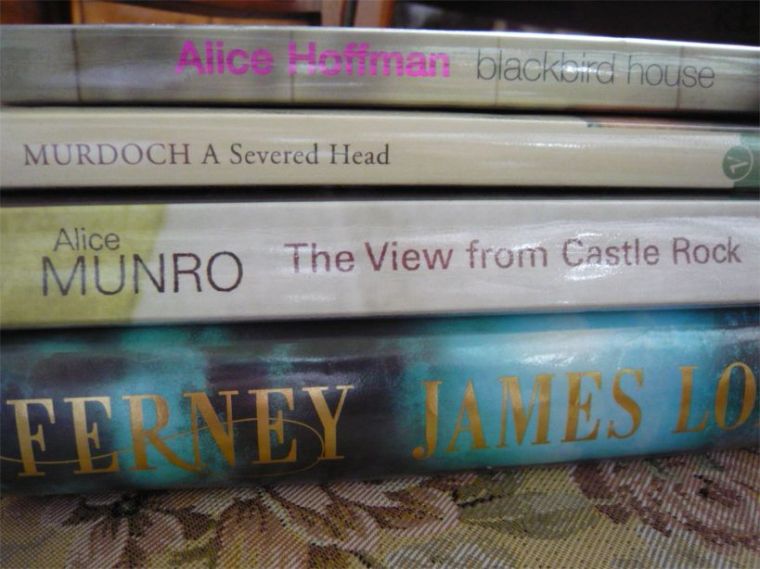
  • Blackbird House by Alice Hoffman – a book of short stories. This appeals to me because the stories are about the families who have lived in Blackbird House on the wild coast of Massachusetts for over two hundred years. It promises to be a magical tale. I haven’t read anything by Alice Hoffman yet although I have got Practical Magic.
  • The View From Castle Rock by Alice Munro – biographical fiction, “a brilliantly imagined version of the past.” Munro’s family emigrated  from Edinburgh to Canada in the 18th century.
  • Ferney by James Long. Cornflower wrote about this book and I added it to my wishlist, so I was really pleased to see it in the library. It’s set in a broken-down old cottage in Somerset , a couple’s dream and financial nightmare.
  • A Severed Head by Iris Murdoch. I may have read this many years ago, but I’ve been thinking about reading Murdoch’s books recently and this was the only one in the library that I thought I hadn’t read. Elizabeth Jane Howard’s quote on the book describes the book as a “comedy with that touch of ferocity about it which makes for excitement.”

The question now is will I read them before 26 February when they’re due back. That all depends upon what I feel like reading and I have plenty to choose from – another 8 books from the library or any of the other books sitting around waiting to be read.

Booking Through Thursday – Too Much Information?

 btt button

Suggested by Simon Thomas:

Have you ever been put off an author’s books after reading a biography of them? Or the reverse – a biography has made you love an author more?

I  like reading biographies and autobiographies, particularly of authors, so I’ve read quite a lot. None of them have changed my mind about the books they’ve written. I may not like what I’ve read about them but that has not affected my enjoyment of their books. There may be things about them, or alleged about them that I don’t like – I’m thinking of Lewis Carroll here – but even so I can separate that from what they’ve written.

spiral001Reading some biographies or memoirs has increased my enjoyment of an author’s books, for example reading Karen Armstrong’s The Spiral Staircase, which recounts her spritual journey from a convent to an academic career, makes me appreciate the honesty in her writing not only about Christianity, but also Judaism and Islam.

LibraryThing – “Will I Like It?”

a-leap001I was nicely surprised the other day when I had a new comment on my LibraryThing Profile page telling me I’d snagged a copy of A Leap by Anna Enquist. Surprised because the closing date for requesting books hadn’t even ended. I’ve snagged a few books from Early Reviewers before but only received them months later. In fact, Sue Guiney’s Tangled Roots never arrived at all via LT  – I’ve now received a copy thanks to Sue, herself!  So I was even more surprised and delighted when A Leap popped through my letterbox this morning (it’s a slim book of 84 pages).

When I added it in to my library I found a new feature, well I’ve only just noticed it at any rate. It’s on each book’s Main Page headed “Will you like  it?” –  a bar sliding from “won’t like”, “will probably not like”  “will probably like” “will like”, “ will love”. So now I’ve been checking it out to see if it really can tell whether I’ll like a book or not.

I checked The Hidden by Tobias Hill, which I write about here. LT thinks I’ll “love it” – actually I liked it, well not far wrong there. So I then looked at Death of a Gossip, which found rather disappointing (I wrote about it here). I wouldn’t go as far as saying I don’t like it, but in LT’s terms I’d rate it “will probably not like”, but LT thinks I “will probably like it” – wrong!

Currently I’m reading Tartan Tragedy by Antonia Fraser and I’m thinking of giving up on it. It’s set in the Scottish Highlands where Jemima Shore is on holiday caught up with the mystery of Charles Beauregard’s death. Allegedly he was descended from Bonnie Prince Charlie.  I should be “loving it” according to LT but I’m not – it just seems to be so long winded and far-fetched. Part of my problem is that I’m fed up reading what all the characters are wearing. I don’t like to give up on a book (think of the time I’ve wasted but it’s a library book, so no cost involved).

Well, I suppose “Will I like it?” is just a guide and for fun really, but I hope it’s right about A Leap because it predicts that I “will like it”, maybe I’ll even love it..

The Hidden by Tobias Hill

lter_small_transparent The Hidden came to me from LibraryThing’s Early Reviewer Programme. Tobias Hill is a new author to me, but he’s written three other novels, a collection of short stories, a book for children and three collections of poetry.the-hidden

The Hidden is a book about obsession, and secrets, sombre in tone and full of ominous signs of things not being right, of not being what they seem. I enjoyed it, although at times I got a bit lost in the dialogue trying to follow who was speaking and had to backtrack and with the third person narrative I was unsure sometimes who the ‘he’ was. That said, it was a gripping tale of what happens to Ben Mercer.  Ben, emotionally vulnerable after his divorce, leaves Oxford for Greece where he joined a group of archaeologists on a dig in Sparta. The group is made up of five people, including a fellow academic from Oxford, and two beautiful young women. Dazzled by their charisma he is desperate to be accepted as part of their group, to be included, to take part in the strange games they play. But it wasn’t just a game.

It’s also about the history of Sparta. Interspersed in the narrative are Ben’s “Notes Towards a Thesis” and it was in these notes that I found clues about the nature of the group. In ancient Sparta the Crypteia meant “The Secret Matter” or “The Hidden” – young men who were “an instrument of subterfuge and terror”. 

I liked the contrasts in this book, the vivid descriptions of places. Here is an example where Ben is remembering Oxford:

The fog going out through the streets to the rivers, the Thames and the Cherwell, the Evenlode and the Ock. The city always secretive and all the more so at that hour, as it slept, its acres full of unseen courts and cloisters, its lodgings and stairs full of lives, waiting, pending morning.

And again describing Athens:

He recognised the lay of the land, the hills and saddle that ran between them. He knew the history of the ruins on each, the palaces and shrines and graves built one atop the other, like corals, the living on the dead. But the green of the slopes in the sunlight, and the flash of spring flowers; and beyond the ziggurat-steps of the Menelaion, the clear air across the valley, and the city below, and the mountains beyond the city, white capped, momentous … it was spectacular.

A novel about secrets, hidden things that maybe Ben should have left alone. The characters are all difficult to like, maybe because I couldn’t get a clear picture of some of them in my mind. Ben is really rather pathetic and needy and because of that he is easily manipulated. I read the chilling events at the end of this book with increasing unease and a feeling of desolation. It was both gripping and horrific.