It’s been a few weeks since I last wrote a Booking Through Thursday post and I was wondering what today’s question would be. It was quite a surprise to see that it was one I’d suggested!
What is your earliest memory of a library? Who took you? Do you have you any funny/odd memories of the library?
Deb added: Whether you usually read off of your own book pile or from the library shelves NOW, chances are you started off with trips to the library. (There’s no way my parents could otherwise have kept up with my book habit when I was 10.)
So here are my answers. Like Deb there was no way my parents could keep up with my reading habits or their own for that matter without using the library. My love of stories comes from them as my father always read me a bedtime story and would make up stories of his own to tell me. My mother always had a book on the go and I remember she took me to the local branch library, which was a small library with both children’s and adults’ books all in one room. This was before I started school, but according to my parents I could read by myself then. I have many happy memories of using and working in many libraries since then.
The first library book I remember was about Teddy Robinson and I was so upset when Mum said I had to return it, until she explained that I could then take out another book. There’s been no stopping me since. When I got older every Saturday morning we went to the main library in the town, a bus ride away. This was a much bigger library with separate rooms for the children’s and the adults’ books, a reference library, a reading room downstairs and an art gallery upstairs. The library was always very well used – I remember queuing waiting for the library to open at 10am. In those days you could only borrow 4 books, I think. When I was 12 I was old enough to borrow books from the adult library and felt very grown up.
Not surprisingly, perhaps I decided to be a librarian and went to Library School in Manchester for a two-year course and then worked in the Central Library of Manchester Public Libraries. I loved it, apart from the unsociable hours, that is. That library was open Monday to Saturday from 9am to 9pm and I had to work three Saturdays out of four and two late nights a week. Even in the 1970s library funds were being cut, first the book fund was cut and then the opening hours were gradually reduced. I didn’t agree with cutting the book fund but the reduction in the opening hours was welcome.
Before I went to Library School I’d worked for a few months in a small branch library on the outskirts of Manchester. There were two librarians and one assistant plus me as a student and between us we looked after two small branches, one of which was in a static caravan. The caravan was a more interesting library to work in; it was much more informal as it was usually me and the assistant, who was more my age than the two librarians who were near retiring age and were very formal (they never called me by my first name). As I remember it we laughed a lot and were entertained by the lady who cleaned the caravan, whose son had emigrated to Australia and sent her long, amazingly detailed letters about his adventures, something about opal mining, I think, in New South Wales. She had a new instalment, which she read out to us before we opened the library – we should have been straightening the books but listening to her letters was much more interesting.
After I qualified I first worked in the Local History and Jewish Library – they were in adjoining rooms with the library desk in between the two. The Jewish Library was mainly used by school children and a small number of regular readers who used to come and help themselves to the books without any help from us, which was just as well as most of the books were in Hebrew. My involvement in the Jewish Library was to take cuttings out of the Jewish newspapers and as I worked there during the Six Days War that kept me busy. I also looked at the books on the Holocaust, which appalled me – I’d really had no idea of the horror of the atrocities that had been carried out in the concentration camps.
The Local History Library was very different and was used by school children, students, and researchers into family history, social history and house history. I looked after the large photographic and print collections covering Cheshire as well as Manchester, its suburbs and the rest of Lancashire. I particularly remember cataloguing a considerable collection of postcards that had been deposited in the Library by one family. There were postcards sent by and to the numerous children in the family covering the period (I think) from the 1920s to the 1940s.
Along with the good memories there were inevitably a couple of unpleasant incidents that happened whilst I was working at the library. These didn’t happen to me but to library users. One was in the Local History Library on a late shift, when a girl came running up to me saying that a man had flashed at her behind the bookshelves at the far end of the library. The man ran out and was caught by the porter. The other incident was when I had moved to the Cataloguing Department and was working in the main Catalogue Hall, when some girls spotted a young man, ostensibly checking the lower bookshelves – but he held a small mirror in his hand and was using it to look up the girls’ skirts. Again the porters came to the rescue.
There was a weekly meeting where the heads of each department met with the Chief Librarian to decide which books to buy and as I was a Sub-Librarian there were times when I had to stand in for the Local History Librarian at the meetings. It was terrifying – they were all so much older and more senior than me and the Chief Librarian was particularly scary – he didn’t suffer fools gladly! I was amazed when they actually listened to me and accepted my opinion on which books to buy. It certainly boosted my confidence. In fact working in the library was a huge confidence-building experience. Every so often we conducted tours of the library telling people what was available in each department which meant that I had to know what went on in each one. I struggled with the schoolchildren who were only there because their teachers had made them come -most of them weren’t interested and just used to giggle. But I loved showing the pre-retirement people round the library as they were so surprised that there was so much available and so interested in it all.
This must be one of the longest posts I’ve written and I’ve only scratched the surface of my memories. There were many happy times, working with books and people who love books. I loved working in each part of the library, meeting people, answering questions and finding books for them. The only drawback was that there was very little time to actually read the books or do any research myself.
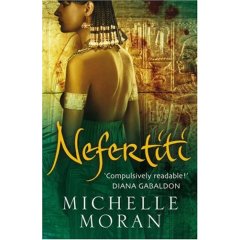 Nefertiti is most irritating – insufferably self-confident, arrogant, demanding, lusting after power, manipulative, superior, full of her own self-importance and well, beautiful; just as you would expect her to be, a jealous selfish queen. I’m about half way through the book now and am enjoying it despite my dislike for Nefertiti, maybe she’ll become more likeable but I doubt it. As I read, ancient Egypt comes to life as Moran describes the building of the new city of Amarna, which Nefertiti boasted:
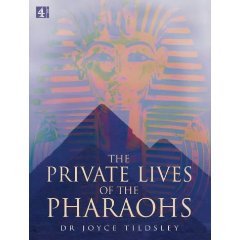 Reading Nefertiti reminded me of another book on Egypt: The Private Lives of the Pharoahs by Dr Joyce Tyldesley, which I bought a few years ago, only for it to sit unread on the bookshelves, until now. This book looks at the pyramids, how and why they were built; why the 18th Dynasty died out; and who was the boy-pharoah Tutankhamun. I’ve only dipped into this book so far, but it promises much and has a Further Reading section with yet more books to look out for. I see on Amazon that Tyldesley has also written, amongst many other books, Nefertiti:Egypt’s Sun-Queen . I really must read this as well.
 BooksPlease