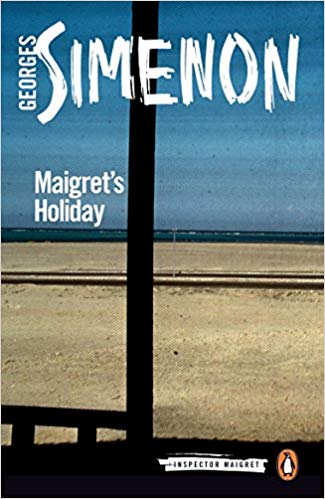
Maigret’s Holiday by Georges Simenon

I am way behind with writing about the books I’ve read, so I thought it’s best to start catching up by writing about the last book I finished, whilst it is still relatively fresh in my mind.
Rating: 5 out of 5.

Maigret’s Holiday, translated by Ros Schwartz, is one of Penguin Classics’ new translations of the entire series of Georges Simenon’s Maigret novels. This edition was published 4 February 2016. It was first published in French as Les Vacances de Maigret in 1948 (the 28th book in the series) and has previously been published in translations as No Vacation for Maigret and A Summer Holiday.

It is August; Maigret and his wife are on holiday in the seaside town of Les Sables d’Olonne. On their first evening they’d eaten a huge dish of freshly caught mussels and they’d both been ill. Maigret quickly recovered but next day on the beach Madame Maigret complained of vague pains and their second night she developed a fever. Admitted to hospital the next day, she was still there nine days later after an emergency operation for acute appendicitis. When a young woman in room 15 in another ward died, Maigret was unable to resist investigating the circumstances of her death, especially as he had received an anonymous note that had been slipped into his pocket; the words irritated him:

For pity’s sake, ask to see the patient in room 15.

The young woman had died after being flung from a moving car. Of course, it is not a straightforward death and the mystery deepened with the disappearance of her brother.

Maigret visited his wife everyday for half an hour. But he was bored with his routine as he strolled around the resort, along the promenade, Le Remblai, feeling he couldn’t go and sit alone on the vast beach among all the mothers and their children. He wandered from stall to stall in the covered market and stopped at cafes and various favourite places for a glass of white wine or of Calvados. Each afternoon he went to the Brasserie du Remblai, overlooking the beach, where a group of important men, including the local chief inspector of police, Monsieur Mansuy, met to play bridge. Maigret sat and watched them play. And it is through Mansuy that Maigret learns about the local characters, which proves essential for him in solving the mystery.

I loved the way Simenon sets the scene. His writing is direct and lucid with just the right amount of description. I could imagine myself in Les Sables d’Olonne, walking on the narrow cobblestone streets and going into the hospital with its atmosphere that reminded Maigret of his childhood when he was a choirboy – ‘the purity of silence had a quality that cannot be found anywhere other than a convent.’ A hospital where the nurses were nuns.

Maigret relieved his boredom by investigating the mystery surrounding the patient in room 15. He gradually peeled back the layers and without him, no one would have had any idea what had really happened or why. Maigret worked methodically and thoroughly, as he tried to understand the locals and their reactions to the police. In the end he painstakingly visited the shops and cafes asking questions and realised that there was at least one other person in danger. But he knew nothing about that person, not even whether it was a man or a woman and he couldn’t guess their age or profession. As he got closer to the solution he became agitated, so much so that it seemed to him that he was no longer breathing, as he tried to avert a further tragedy.

I thoroughly enjoyed reading this book. It is perfectly paced, building in intensity and complexity, over just 199 pages. A note about the author reveals that Simenon acknowledged that he and his fictional detective shared an important characteristic:

My motto, to the extent that I have one, has been noted often enough, and I’ve always conformed to it. It’s the one I’ve given to old Maigret, who resembles me in certain points … ‘understand and judge not.’

I think that is exactly what Maigret does in this book.
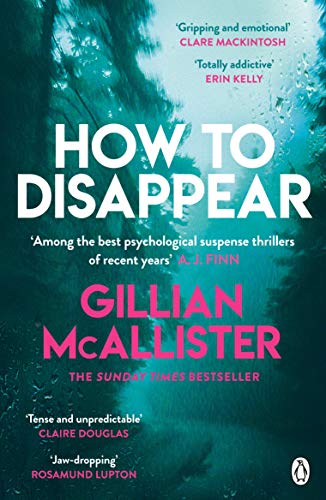
How to Disappear by Gillian McAllister

I’ve read three books by Gillian McAllister and enjoyed each one so I was delighted when I saw that she has a new book, How To Disappear published today. But, I have mixed feelings about this book, because although it is so tense in parts and is compulsive reading – I really wanted to know what happens next – I did have difficulty in suspending my disbelief for a large part of it. I liked the originality of the story – a murder mystery that is not a police procedural or an amateur detective story, but the story of a family devastated by their experience of being in witness protection. Although I’ve seen TV dramas about witness protection I’ve never read a novel before about it.

Blurb:

What do you do when you can’t run, and you can’t hide?

Lauren’s daughter Zara witnessed a terrible crime. But speaking up comes with a price, and when Zara’s identity is revealed online, it puts a target on her back. The only choice is to disappear. To keep Zara safe Lauren will give up everything and everyone she loves, even her husband. There will be no goodbyes. Their pasts will be rewritten. New names, new home, new lives. The rules are strict for a reason. They are being hunted. One mistake – a text, an Instagram like – could bring their old lives crashing into the new. They can never assume someone isn’t watching, waiting.

As Lauren will learn, disappearing is easy. Staying hidden is harder…

I thought it began well, although, it’s written in the present tense, often a stumbling block for me, setting the scene and establishing the characters. Zara is fourteen when she witnesses the murder of a homeless man by two teenagers. A year later she gives evidence as Girl A, to protect her identity, at the trial of two teenage footballers. But it all goes wrong, the boys are freed and after the trial a search is on to discover her identity and make her pay for what she did. As the situation escalates she is forced to go into witness protection.

This is a dark, intense story about what happened next, and going into more detail about what led up to the murder. It’s told from the four main characters’ viewpoints – Zara, Lauren her mother, Aidan her stepfather and his daughter Ruby. It moves along at quite a good pace, although sometimes I thought it was a bit repetitive about long hot baths or lack of a long hot bath, comfort eating cakes, and compulsive shopping.

The main themes of the book are about witness protection, parenting and family relationships. Gillian McAllister explains in her Author’s Note that there are many blanks she was unable to fill in, ‘due to the UK’s protection service not wishing to reveal their secrets’ to her. She hopes it is ‘believable despite basically having … made it up.’ I found it believable up to a point, but it was the characters’ behaviour that I found so far-fetched. However, it certainly made me wonder how I would cope in witness protection, faced with being unable to contact the family I’d left behind in anyway for fear of the consequences. But, most of all, I didn’t enjoy reading it, and for me that is important when I’m reading a novel. It left me drained – and the ending felt so contrived that it really spoiled the whole book for me.

This was not an easy book for me to review, especially as I was expecting to enjoy it as much as her earlier books!

  • Format: Kindle Edition
  • File Size: 1560 KB
  • Print Length: 480 pages
  • Publisher: Penguin (9 July 2020)
  • Source: Review copy
  • My rating: 2

My thanks to the publishers, Penguin for my review copy via NetGalley.

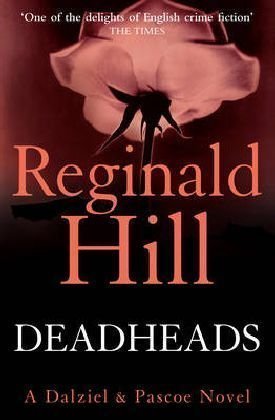
Deadheads by Reginald Hill

5 Stars

Deadheads is the 7th Dalziel and Pascoe novel first published in 1983 and by then Reginald Hill was really getting into his stride and showing his versatility as this book is not a bit like his earlier books. There are deaths, of course, but are they murders? Each one could just as easily be from natural causes or accidents. You think you know from the first chapter who the culprit could be, but I wasn’t really sure – and even by the end I was still wondering if I was right. The police investigation is run mainly by Pascoe and to a certain extent by his wife, Ellie, whilst Dalziel is occupied with other matters, only involved as the mystery draws towards its end.

Blurb

Patrick Aldermann inherits the splendid Rosemount House and gardens on the death of his aunt, and there he is able to indulge his horticultural passions without restraint.

When his boss, Dick Elgood, suggests that Aldermann is a murderer, then retracts the accusation, Peter Pascoe’s detecting instincts are aroused. How did an underachieving accountant make his way to the top of the company so quickly? And why do so many of his colleagues keep dropping dead?

Meanwhile, when not fielding politically incorrect insults from Superintendent Dalziel, Police Cadet Singh—Mid-Yorkshire’s first Asian copper—has dug up some very interesting information about Aldermann’s beautiful wife, Daphne, who’s now firm friends with one Ellie Pascoe…

It’s important to read the first chapter of Deadheads by Reginald Hill very carefully. At first I didn’t, but as I read on I began to think I’d misread it, so I went back to it – and then I understood its significance. It’s a short chapter that sets the theme for the book. Each chapter is named after a particular rose followed by a description of that rose and the first one is called Mischief, a hybrid tea, in which old Mrs Florence Aldermann instructs her great nephew, eleven year old Patrick, how to deadhead roses and explains why it is necessary.

The blurb outlines the plot and to write much more would, I think, mean I’d be giving away too many spoilers. I found the whole book fascinating, written with humour and social commentary on the issues of racism, homosexualty, feminism and marital infidelity. The plot is well executed and Hill’s descriptive writing is, as usual superb, both in terms of the setting and the development of the characters. And I especially liked the ambiguity of the plot and the circularity of the book – ending as it began with Patrick in his rose garden, pruning roses.

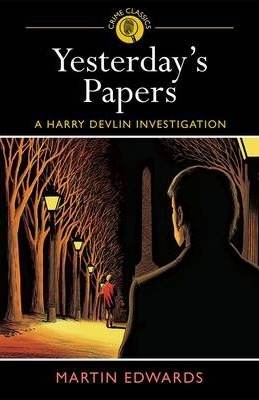
Yesterday’s Papers by Martin Edwards

Yesterday’s Papers is the 4th book in Martin Edwards’ Harry Devlin book in his Liverpool series, first published in 1991 and it’s the first one I’ve read. There are eight books in the series. My copy is a paperback edition, published in 2013 and it is one of my TBRs.

About the book

On Leap Year Day in 1964, an attractive teenager called Carole Jeffries was strangled in a Liverpool park. The killing caused a sensation: Carole came from a prominent political family and her pop musician boyfriend was a leading exponent of the Mersey Sound. When a neighbour confessed to the crime, the case was closed. Now, more than thirty years later, Ernest Miller, an amateur criminologist, seeks to persuade lawyer Harry Devlin that the true culprit escaped scot free. Although he suspects Miller’s motives, Harry has a thirst for justice and begins to delve into the past. But when another death occurs, it becomes clear that someone wants old secrets to remain buried – at any price…

My thoughts

I’ve enjoyed Martin Edwards’ Lake District mysteries, so I was expecting to enjoy his Liverpool novels, featuring solicitor Harry Devlin, and I’m glad to say that I did enjoy this one. The titles of the books are all taken from songs – Yesterday’s Papers is a song by the Rolling Stones from their 1967 album, Breaking the Buttons. In this book Harry is investigating a crime dating back thirty years to the 1960s, the period of Beatlemania, with the focus on the sixties music scene. It has a great sense of place – Martin Edwards obviously knows Liverpool very well.

Although I wanted to know more about Harry Devlin, this does work well as a standalone as there is enough information to get some idea about his character and personal life – his wife, Liz, died – murdered – ten years earlier; he has no family and lives alone. (I must read the first book, All the Lonely People to find out what happened to Liz. ) He is in partnership with Jim Crusoe. Thirty years ago when Edwin Smith was charged with murdering Carole Jeffries Tweats had been his solicitor, so when Crusoe and Devlin had taken over Tweats’ practice the case files, including that of her murder, were handed over to them. Harry is intrigued when Ernest Miller is convinced that Smith was innocent and when Smith is found dead, possibly murdered too, he decides to look into the case.

I like Harry. He is thorough and is not easily deterred, even though it’s difficult to get to the truth after the passage of thirty years, especially when Carole’s father had died and her mother is extremely reluctant to talk to Harry. Needless to say, this proves to be a complicated case and I had little idea what the outcome would be. I had my suspicions, but was wrong and only worked it out just before the end of the book. I thoroughly enjoyed Yesterday’s Papers and am keen to read more about Harry Devlin!

The Liverpool series:

  • All the Lonely People (1991)
  • Suspicious Minds (1992)
  • I Remember You (1993)
  • Yesterday’s Papers (1994)
  • Eve of Destruction (1996)
  • The Devil in Disguise (1998)
  • First Cut is the Deepest (1999)
  • Waterloo Sunset (2008)

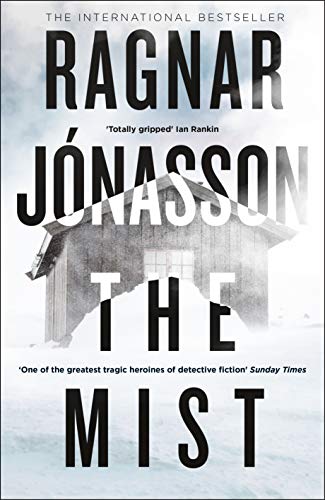
The Mist by Ragnar Jonasson

Nordic noir, as bleak, cold, snowy and empty as Iceland.

Penguin UK – Michael Joseph/ 30 April 2020/ 320 pages/ review copy/ 4*

About the book

1987. An isolated farm house in the east of Iceland.

The snowstorm should have shut everybody out. But it didn’t.

The couple should never have let him in. But they did.

An unexpected guest, a liar, a killer. Not all will survive the night. And Detective Hulda will be haunted forever.

My thoughts

The Mist is the third novel in Ragnar Jonasson’s Hidden Iceland series, translated from the Icelandic by Victoria Cribb. The trilogy began with The Darkness in which Detective Inspector Hulda Hermannsdottir was on the verge of retirement. The second book, The Island goes backwards in time with an investigation in 1997. The Mist featuring Hulda goes back yet again to 1987 as Hulda is worrying about her daughter, Dimma and her relationship with her husband, Jon. Alongside the story of what is happening in her personal life, she is also investigating the disappearance of a young woman and a suspected murder case, a particularly horrific one in an isolated farmhouse in the east.

I thought the first part of this book, about Erla and her husband, Einar, who live in the furthest reaches of eastern Iceland was completely gripping, especially with the arrival of a stranger lost in a snowstorm. Erla invites him in and the nightmare begins. This is one of those books where to know too much about the plot would really spoil it. All I’m going to say is that it starts slowly, and the tension and suspense gradually rise throughout, with an increasing sense of dread.

I loved the setting, Jonasson’s writing bringing the scenery and the weather to life – you can feel the isolation and experience what it is like to be lost in a howling snowstorm. The emotional tension is brilliantly done too, the sense of despair, confusion and dread is almost unbearable. My only criticism, a small one, is that when I reached a certain point in the novel, quite a bit before the end, it seemed obvious to me what the outcome would be. It didn’t spoil my enjoyment, but I would have preferred not to have known and is the reason I’ve given this 4 stars instead of 5.

My thanks to the publishers for my copy via Netgalley.

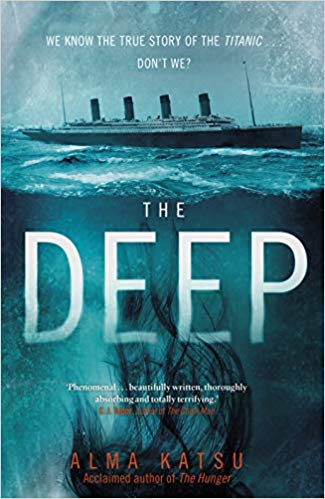
The Deep by Alma Katsu

Random House Bantam Press| 5 March 2020| 391 pages|e-book| Review copy| 3*

About the Book

Deaths and disappearances have plagued the vast liner from the moment she began her maiden voyage on 10 April 1912. Four days later, caught in what feels like an eerie, unsettling twilight zone, some passengers – including millionaire Madeleine Astor and maid Annie Hebbley – are convinced that something sinister is afoot. And then disaster strikes.

Four years later and the world is at war. Having survived that fateful night, Annie is now a nurse on board the Titanic’s sister ship, the Britannic, refitted as a hospital ship. And she is about to realise that those demons from her past and the terrors of that doomed voyage have not finished with her yet . . .

Bringing together Faustian pacts, the occult, tales of sirens and selkies, guilt and revenge, desire and destiny, The Deep offers a thrilling, tantalizing twist on one of the world’s most famous tragedies.

My thoughts

I loved The Hunger by Alma Katsu, so I was looking forward to reading The Deep. It began really well and it’s beautifully written. It’s a mix of fact and fiction. It moves between 1912 as the Titanic sets sail on its maiden voyage and 1916, as its sister ship the Britannic, converted to a hospital picks up soldiers injured in the battlefields to take them back to England. There is a large cast of characters, some are real people and others are fictional; the stories on the two ships are told from their different perspectives.

The story revolves around Annie Hebbley, a stewardess on the Titanic and a nurse on the Britannic. It begins in 1916 when she is in an asylum and receives a letter from a friend, Violet Jessop (a real person) who had been on the Titanic with her, asking her to join her as nurse on the Britannic. Annie, however, has a dark secret in her past, which is slowly revealed – most of the time I was reading I couldn’t decide how much was real and how much imaginary. She grew up in Ireland and her mind is full of the fairy stories and superstitions her grandmother had told her. And things start to go wrong as soon as she boards the Titanic.

It didn’t grip me as much as The Hunger, although it’s a very atmospheric novel and I loved the way Alma Katsu has combined fact and fiction. The scenes on the Titanic convey the splendour of the ship, the wealth of the passengers and the contrasting conditions between the different classes of passengers, and the crew. Similarly, the stark conditions on The Britannic and the suffering of its passengers are vividly portrayed. Some of the passengers are convinced that the ship is haunted and there is a genuine sense of menace, of something sinister and supernatural waiting to strike them all. However, I didn’t think the supernatural elements were as convincing later on in the novel and I found the ending confusing.

It’s not a quick read, beginning slowly and, although at first I thought this was going to be a really engrossing novel, my interest began to flag later on. I was actually relieved when I finished it. That maybe because I knew the fate of the Titanic and I didn’t empathise with Annie, the main character. As historical fiction I think it works quite well, but the main focus of the book is not the sinking of the Titanic or of the Britannic – it’s the story of the passengers and crew of both ships. The supernatural elements just confused me – especially the ending, which is so ambiguous – just who was Annie Hebbley? It’s surreal and I suppose you just have to make your own mind up. It’s been in my mind ever since I finished reading.

My thanks to the publishers and NetGalley for providing me with a review copy.

This is my first book for Cathy’s 20 Books of Summer, and my eighth book for the Historical Fiction Challenge.